
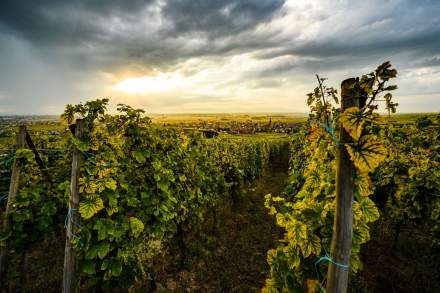
Vignoble et dégustation à Wettolsheim
Émotion, transmission, passion
Au cœur de l’Alsace, à quelques kilomètres de Colmar et Eguisheim, le Domaine Barmès-Buecher est un vignoble de 18 hectares situé au pied des collines sous-vosgiennes.
Certifié en biodynamie depuis 2001, le Domaine signe son engagement pour le respect du vivant, des vignes et des Terroirs, avec les égards dus à la terre transmise et travaillées par ses ancêtres.
A la faveur d’un travail sur-mesure, adapté à chaque parcelle, les vins dévoilent une personnalité unique et forte.
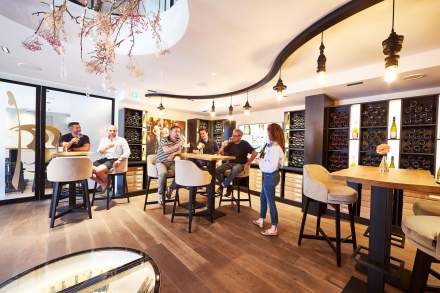
Dégustation
au Domaine Barmès-Buecher
Installés depuis juillet 2022 dans la grange de Jules et Joséphine Barmès entièrement rénovée, nous avons à cœur de vous accueillir au Domaine pour vous faire découvrir nos vins et partager notre passion.
Afin de vous offrir un moment personnalisé, nous privilégions les dégustations sur rendez-vous. Que vous soyez un professionnel ou un particulier, nous prendrons ainsi le temps, de vous accompagner à la découverte de nos vins.
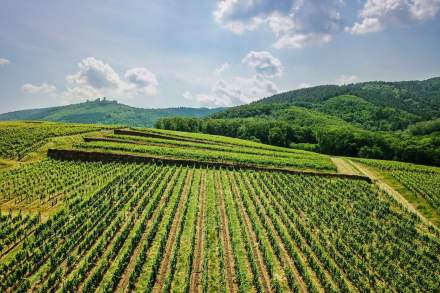
Découvrez
nos vins biodynamiques
Domaine en biodynamie
En choisissant une culture biodynamique, nous plaçons le respect du terroir et du vivant au centre de nos préoccupations, afin qu’ils deviennent un élément essentiel à la qualité de nos vins.
Outre le respect des principes de base de l’agriculture biologique, la biodynamie considère plus largement l’environnement et ses interactions sur la nature alentours.
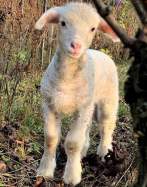
Une présence attentive permet de stimuler les forces de vie par le biais de préparations biodynamiques, la plantation de haies, l’enherbement, l’installation de nichoirs...
Une attention particulière est également portée au calendrier lunaire, notamment lors de certains travaux dans les vignes ou en cave.
Nous confirmons notre engagement en faveur de la biodynamie et des vins de Terroirs en étant membres de Biodyvin et du groupe Renaissance des Appellations, ce dernier ayant pour but de promouvoir la pleine expression des Appellations dans une logique essentiellement biodynamique.
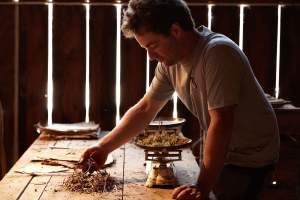
Nos vins,
l’empreinte d’un terroir,
l’émotion à la dégustation
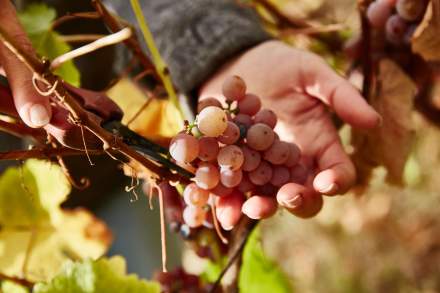
Nous élaborons nos vins au cœur de la vigne pour produire une excellente matière première, le raisin, cultivé avec attention et respect.
Nos vins sont le reflet de la relation subtile qui relie la vigne, le terroir, le millésime et le vigneron.
Ainsi, afin de respecter au mieux la vigne et son terroir, nous encourageons la main d’œuvre manuelle et limitons la mécanisation des travaux du vignoble, en privilégiant les engins agricoles légers afin de réduire au maximum les phénomènes de tassement des sols.
La traction animale a notamment été rétablie dans le Grand Cru Hengst. Nous recherchons et favorisons le travail sur-mesure, parcelle par parcelle, afin de produire des vins de terroir et de grande authenticité.
Notre équipe œuvre au quotidien, en étroite collaboration avec Maxime. Ce travail, effectué avec rigueur et précision, concourt à la réussite de vins uniques.
Chaque bouteille porte l’empreinte de son terroir, dans la continuité du travail familial entrepris depuis plusieurs générations.